Conversation, Entertainment, and Information
3.3.1 Introduction: The Rise of the Microblog
-
Simplicity as Strategy: Twitter’s success stems from its “brass-tacks” construction: a stream of short messages and an empty box.
-
Cultural Impact: Used for political campaigns, fan engagement, and real-time coordination during natural disasters (hurricanes, wildfires) or political turmoil (Iran 2009).
-
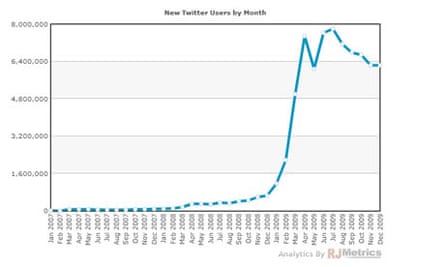
Growth Milestones: * SXSW 2007: Initial “tech-savvy” buzz.
- The “Oprah” Effect (2009): Mainstream adoption driven by celebrities like Shaquille O’Neal, Ashton Kutcher, and Oprah Winfrey.
-
Ecosystem: Beyond the web interface, third-party clients like TweetDeck and Twhirl allow for specialized views (columns, search queries).
3.3.2 The Nuts and Bolts
Twitter is a conversational microblog where users post “tweets” limited to 140 characters (originally for SMS compatibility).
Key Terminology
-
Followers: People who subscribe to your messages.
-
Friends: People whom you follow.
-
@replies & @mentions:
-
@reply: A tweet starting with a username (e.g.,
@redlog). A “marker of addressivity” that keeps conversations coherent in a noisy environment. -
@mention: Including a name within a tweet but not at the start.
-
Symmetry: While following is often asymmetric (celebrities have fans but don’t follow back), the exchange of @replies creates a symmetric connection, indicating a stronger social tie.
-
-
hashtags: * Community-driven descriptive keywords.
- Used for events (#chi2010), news (#mumbai), or games (#robotpickuplines).
-
Retweeting (RT): * Rebroadcasting someone else’s tweet with attribution.
- Functions as validation (I like this) and amplification (I want my followers to see this).
3.3.3 Networks in Twitter: Attention vs. Information
The “Friends/Followers” network is actually two distinct networks overlaying the same people:
-
Attention Network: Follower ties show where attention flows (e.g., from a fan to a celebrity).
-
Information Network: The reverse direction; shows where information flows (from the tweeter to the followers).
Centrality Metrics in Twitter
-
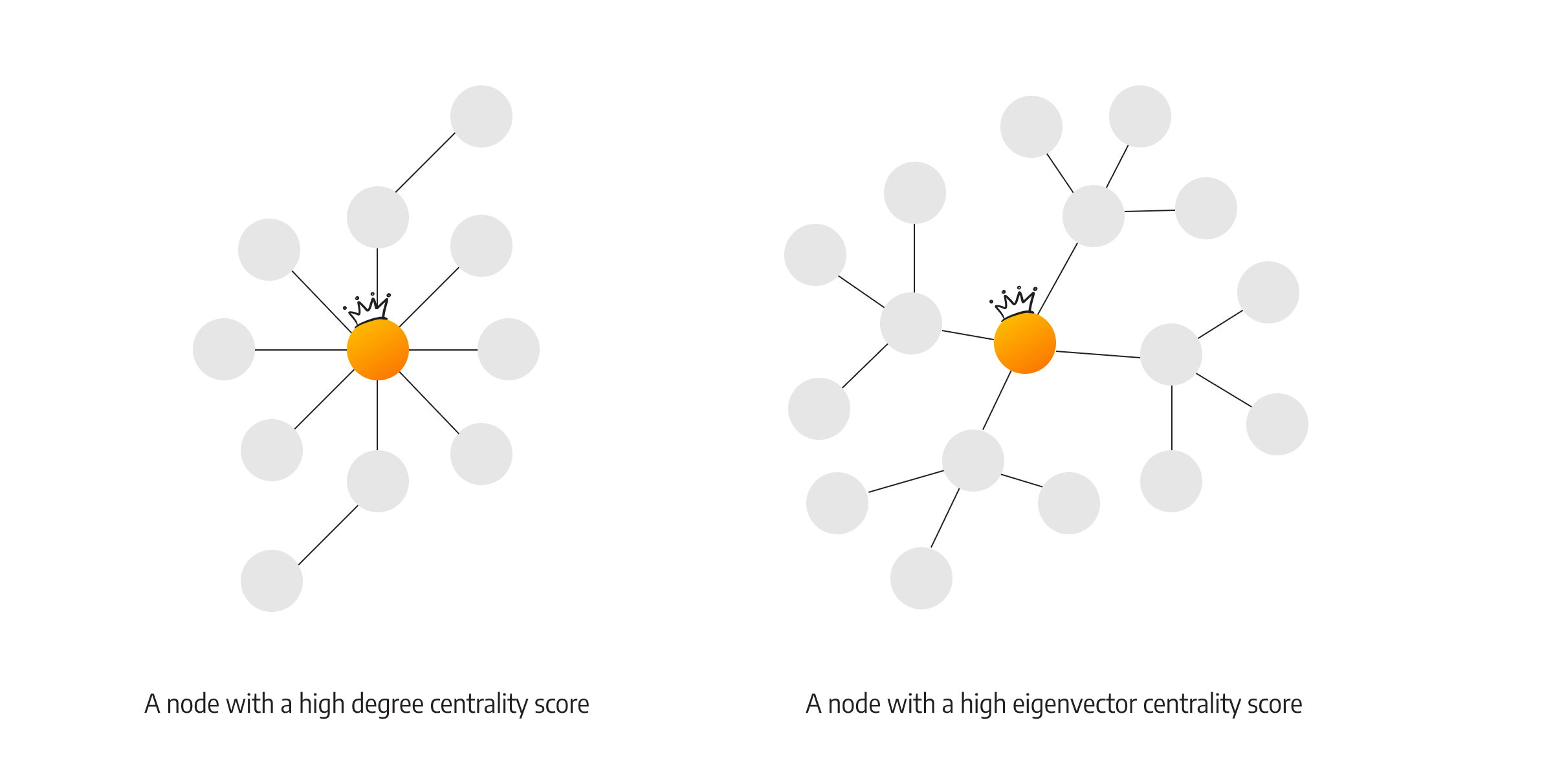
Eigenvector Centrality (Importance): Measures influence. You are important if you are followed by other “important” people (similar to Google’s PageRank).
- Practical Use: Identifying spammers who may have many followers, but whose followers are unimportant/fake.
-
Betweenness Centrality (Brokerage): Measures access to non-redundant information.
- The “Bridge”: An actor who connects two otherwise unconnected clusters. High betweenness actors are “information brokers” who see diverse content first.
3.3.4 Acquiring Data & Limitations
-
NodeXL Options: “From Twitter User’s Network” (Ego-centric) or “From Twitter Search Network” (Topic-centric).
-
Rate Limits: Twitter restricts standard accounts to 150 requests per hour. Whitelisting can increase this to 20,000/hour.
-
Speed: Data collection is slow (10–30 seconds per user). Mapping a network of 1,000 users can take hours.
3.3.5 Discovery with NodeXL
3.3.5.1 The Ego Network
-
Ego: The focal user. Alters: The user’s friends and followers.
-
Strong Ties vs. Weak Ties:
-
Reciprocal Ties: (You follow me, I follow you) usually indicate close friends or colleagues.
-
Closed Triads: If two of your friends know each other, it forms a “closed triad,” suggesting a tight, cohesive community.
-
-
Cluster Detection: Using NodeXL’s “Find Clusters” can automatically separate your Twitter alters into real-world groups (e.g., “Family” vs. “Work Colleagues”).
3.3.5.2 Trending Topics (Information Diffusion)
-
Diffusion Patterns:
-
Star Pattern: One user’s tweet is retweeted by many followers (highly influential “seed”).
-
Grid Pattern: Users only mention a topic after seeing it from multiple sources (social influence/redundancy is key).
-
-
Case Study: BlackFriday:
- Analysis reveals “seeds”—specialized accounts that may have few followers but are highly effective at getting their messages retweeted by larger, more active accounts.
3.3.6 Practitioner’s Summary
-
Strategy is Key: Whether for personal branding or business, you must identify the network structure.
-
Starlike networks prioritize the center; Cohesive networks prioritize the group.
-
Identify “seeds” (influential promoters) to maximize information spread for free.
3.3.7 Researcher’s Agenda
-
Micro-level: Studying individual features like retweets and @replies.
-
Macro-level: Mapping memes, idea spread, and organizational connections across institutional boundaries.
-
Challenge: Obtaining and visualizing the “minute details” of human conversation as networks change over time.